
Designing trust at the worst moment
I turn high-stress journeys—like flight cancellations—into clear, self-service experiences that customers trust. Building premium products that scale: reducing support load, increasing satisfaction, and making value real when it matters.
Context
Cancelling a trip is rarely a rational decision. It usually happens because something went off-plan — and in those moments, what people need isn’t abstract flexibility, but certainty.
Cancel for Any Reason existed exactly for that.
And yet, to use it, customers still had to call the contact center.
That forced them to relive the problem out loud at the worst possible time — while keeping a premium benefit running in “manual mode”: dependent on humans, expensive to operate, inconsistent across agents, and hard to scale without increasing friction and operational load.
This project started from that quiet mismatch: a benefit designed to give autonomy only felt reliable when someone mediated trust.
Where the needs started to converge
Data from CX and the contact center made the pattern clear.
From the customer side:
The most common questions weren’t about policy details
They were about certainty
“Will this actually work?”
“What happens after I cancel?”
From the business side:
CFAR cancellations generated a disproportionate share of contacts
Each call solved a case, but not the system
Adoption was growing faster than the product’s maturity
There was a clear point of convergence: reducing customer uncertainty also reduced the business's operational dependence. The challenge was doing that without turning the flow into a persuasion tool.

The risk that shaped the approach
Digitising cancellation could easily go in the wrong direction.
An overly “optimised” experience might:
Increase credit usage
But undermine trust
And turn a protective benefit into something that feels defensive
From a business perspective, short-term gains weren’t worth the reputational risk of being read as a dark pattern in such a sensitive moment.That balance — protecting trust while gaining scale — became the axis of the project.


How the design translated that balance
Relevance before visibility
THE HOW
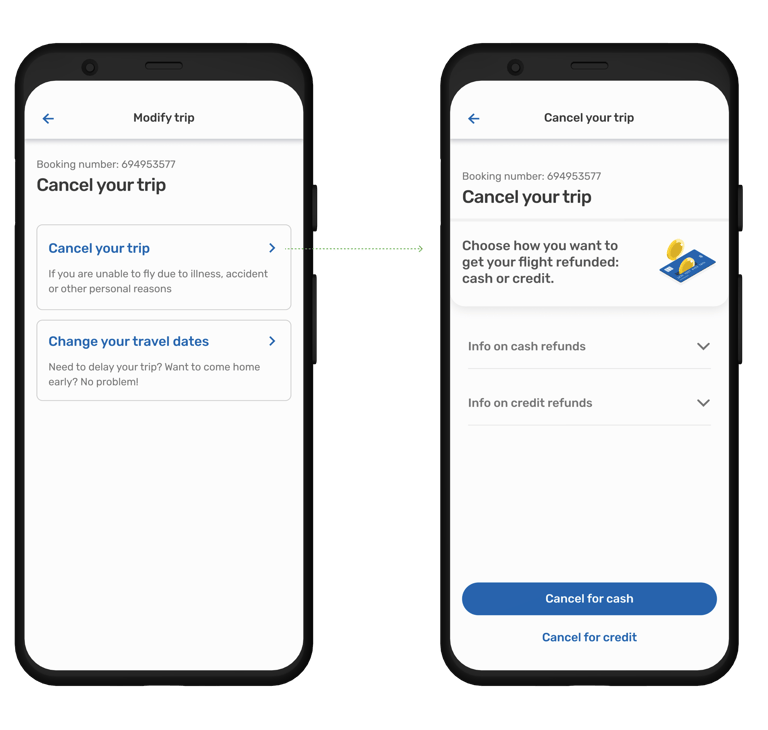
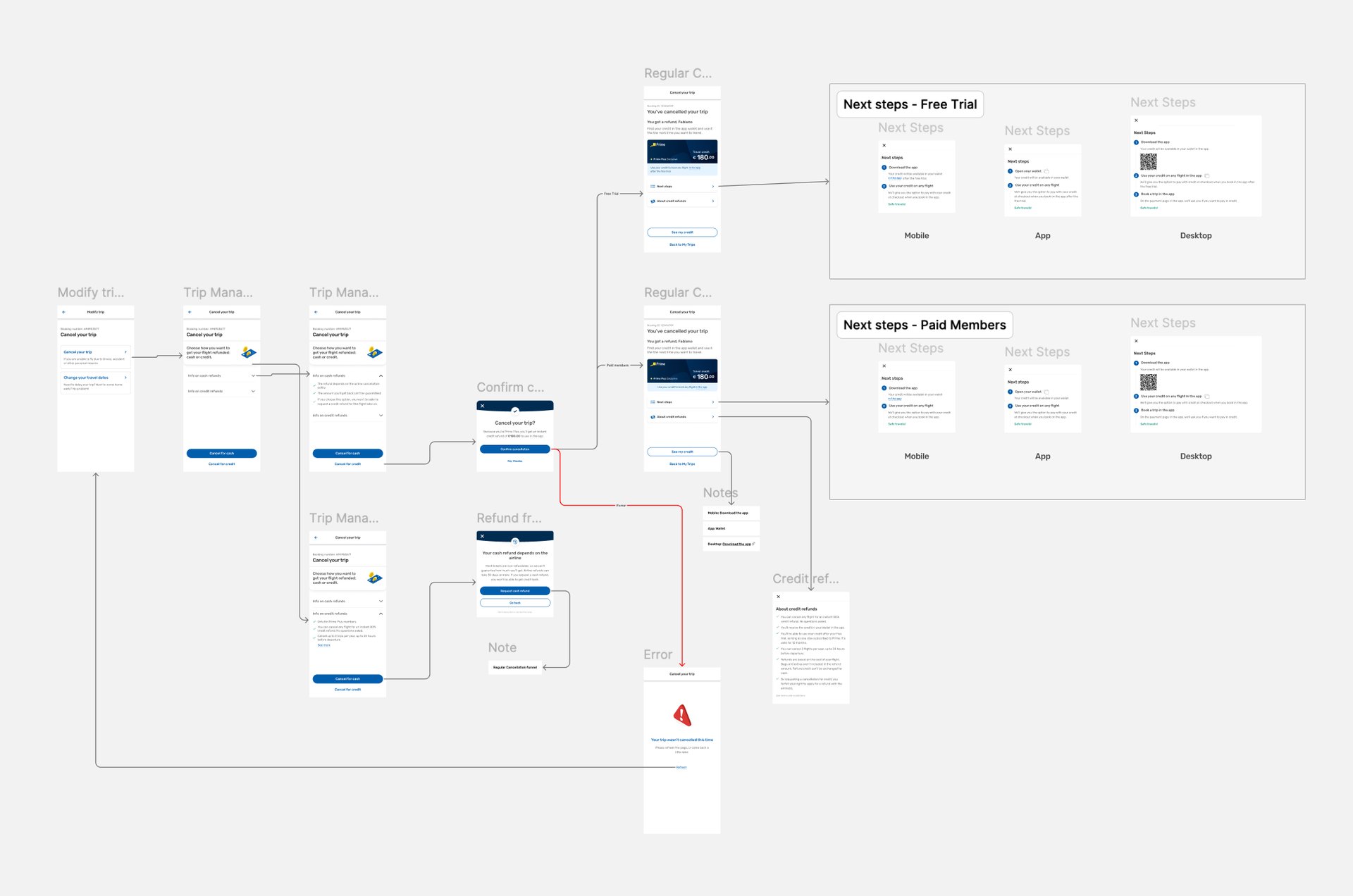
The first structural decision was simple and slightly non-obvious: the flow should only exist for people who could actually use it.
This kept cancellation on the right path: fewer false expectations in the moment, and less noise coming back later as contacts, tickets, and rework — while also protecting the perceived integrity of Prime when a user wasn’t eligible for CFAR.
There was no value in “showing the benefit” to someone who couldn’t access it.
There was value in respecting context.
1
2
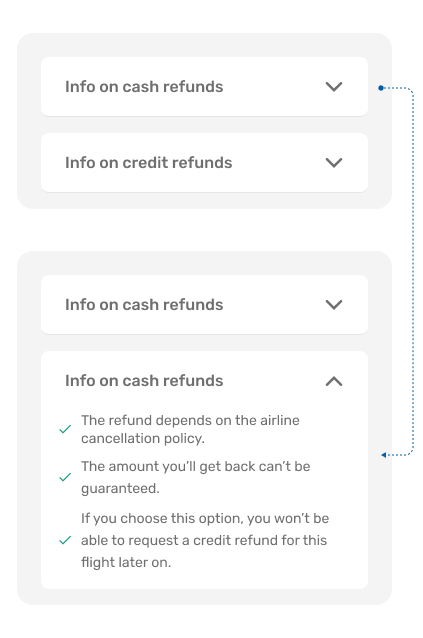
Reducing cognitive load protects both conversion and trust
The data showed customers didn’t need more information — they needed the right information at the right time.
The flow was designed to:
Answer key doubts before confirmation
Make outcomes predictable
Avoid any post-action surprises
Less cognitive friction, less operational friction.
3
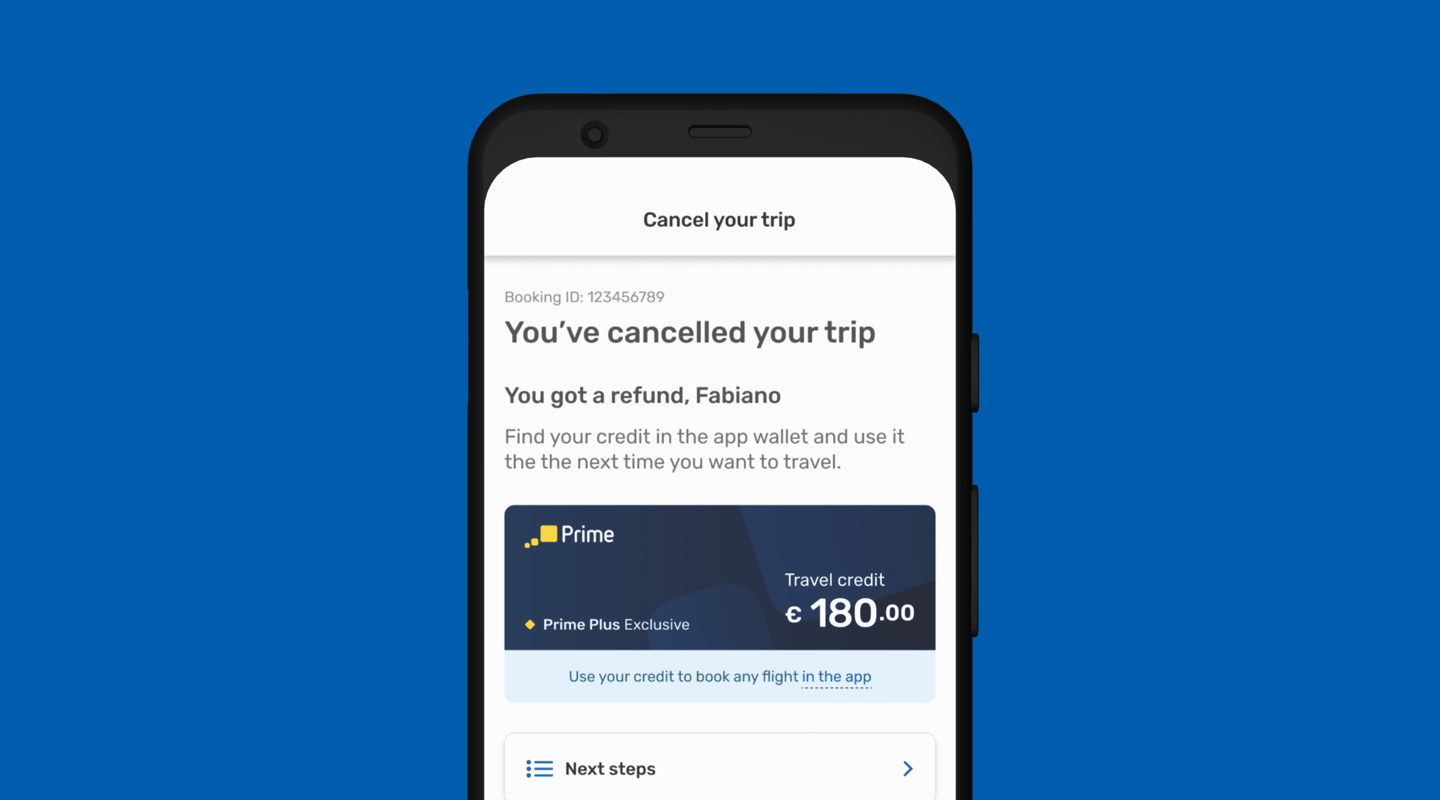
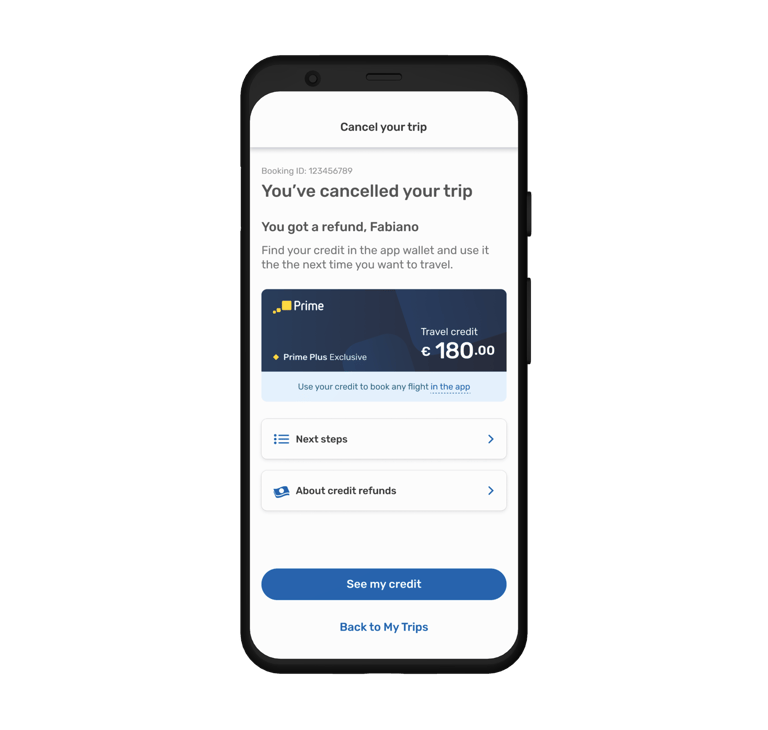
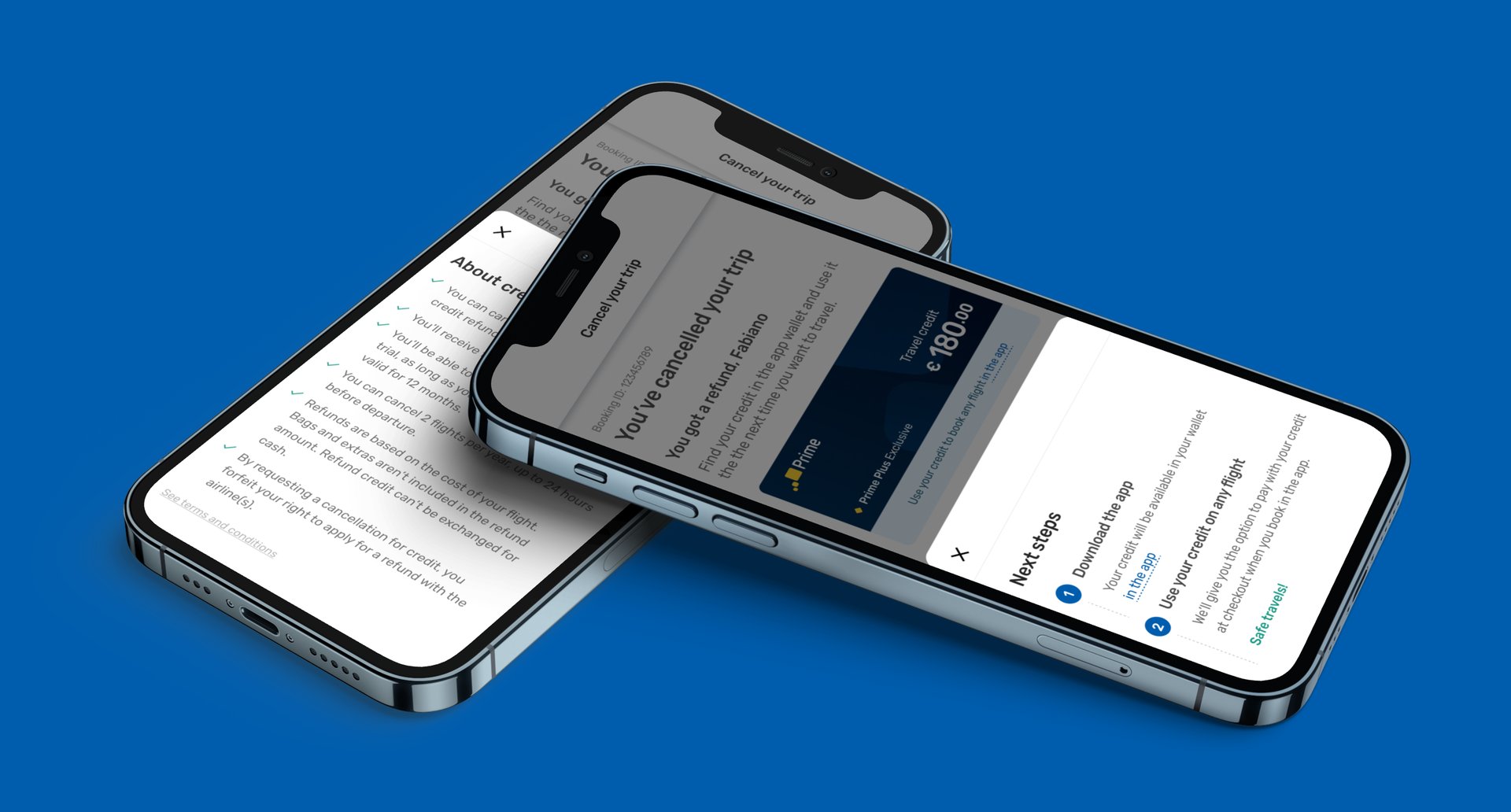
A post-cancellation experience that closes the loop
After cancelling, customers needed to feel the situation was truly resolved.
Wallet credit was treated as:
Proof the benefit worked
Not a push towards the next purchase
Post-cancellation was designed to close the story with clarity: a factual refund confirmation, straightforward guidance on where the credit lives, and explicit next steps.
When that “resolved” feeling exists, you reduce re-contact and disputes — and when customers return, it happens as a consequence of trust preserved, not pressure.
The retention observed was the result of preserved trust, not artificial lock-in.
The designer’s role in that tension
Working as a Senior Product Designer here meant accepting that:
Not every value needs to be pushed
Not every optimisation should be visible
Not every short-term metric is worth the reputational risk
The work was less about adding elements and more about removing the wrong incentives — balancing human needs with the goals of scale, efficiency, and Prime’s long-term sustainability.


How about the impact?
The most meaningful impact was systemic:
the benefit started working consistently at product level, without depending on human mediation.
+8.2%
in Prime subscriptions
27.5%
reduction in cancellation-related contact center calls
9%
reduction in cancellation-related contact center calls
+1.3
points increase in NPS during the cancellation moment
What this project made clear
Customer autonomy and operational efficiency aren’t opposing forces
Trust is a product asset, not just a brand asset
Strong exception flows balance empathy and scale
Seniority shows up when design protects the business without sacrificing the customer
Here's my resumé